


Heather Carter-Templeton, Editor-in-Chief of CIN: Computers, Informatics, Nursing, discusses her editorial journey and the significance of the journal, which has served nurses for nearly 35 years. She emphasizes the importance of AI in both healthcare and writing, while encouraging authors to establish good habits and actively participate in the publishing process.
Tag: AI
Confessions of a Highlighter Addict

Molly McCullough discusses her journey from relying on highlighters to recognizing effective paraphrasing's role in writing and retaining information. She highlights the importance of understanding plagiarism and provides strategies for better paraphrasing. This approach enhances clarity, integrity, and academic success, emphasizing the need for proper citation practices.
Commentary from the Camp Director: Reference Managers Redux
Leslie H. Nicoll emphasizes the critical role of reference managers in maintaining integrity in scholarly writing, especially in an age where AI can generate fabricated citations. Authors must engage directly with cited sources to ensure accurate references, as the failure to do so undermines research integrity and accountability within academic publishing.
Artificial Intelligence and Academic Writing: Innovation with Integrity
Artificial intelligence (AI) is reshaping academic publishing by streamlining workflows, enhancing peer review processes, and offering significant administrative relief. While AI cannot replace human judgment, it assists in tasks like plagiarism detection. Ethical challenges regarding authorship are prominent, emphasizing the need for transparency and responsibility. Embracing AI is essential for scholars' development.
The Disappearing Writer: AI, Authorship, and the Fragile Future of Nursing Trust
Lisa Kelly reflects on the growing issue of AI misuse in nursing education, stemming from a personal experience with faulty citations. She emphasizes that reliance on AI threatens the integrity of nursing by eroding trust and inhibiting critical thinking. The need for transparency, vulnerability, and genuine engagement in writing is paramount to rebuild this essential trust within the profession.
Commentary from the Camp Director: Artificial Intelligence and Me
Leslie H. Nicoll shares her evolving perspective on artificial intelligence (AI) through her experiences with ChatGPT, referred to as Counselor Byte. Initially skeptical, she found AI invaluable in managing metadata for her Writer’s Camp. While acknowledging AI's potential pitfalls, she embraces it as a complement to her writing process and a helpful resource.
Writer’s Camp Bugle #8
Our second CAMPOREE was held on Friday, August 15 and like the first, it was a success! Thank you to everyone who attended. I recorded the session and it is posted on The Writer's CAMPOREE page. If you were not able to attend, or if you want a refresher, hop on over to the Writer's … Continue reading Writer’s Camp Bugle #8
Using Generative Artificial Intelligence for Reformatting References in Scholarly Writing
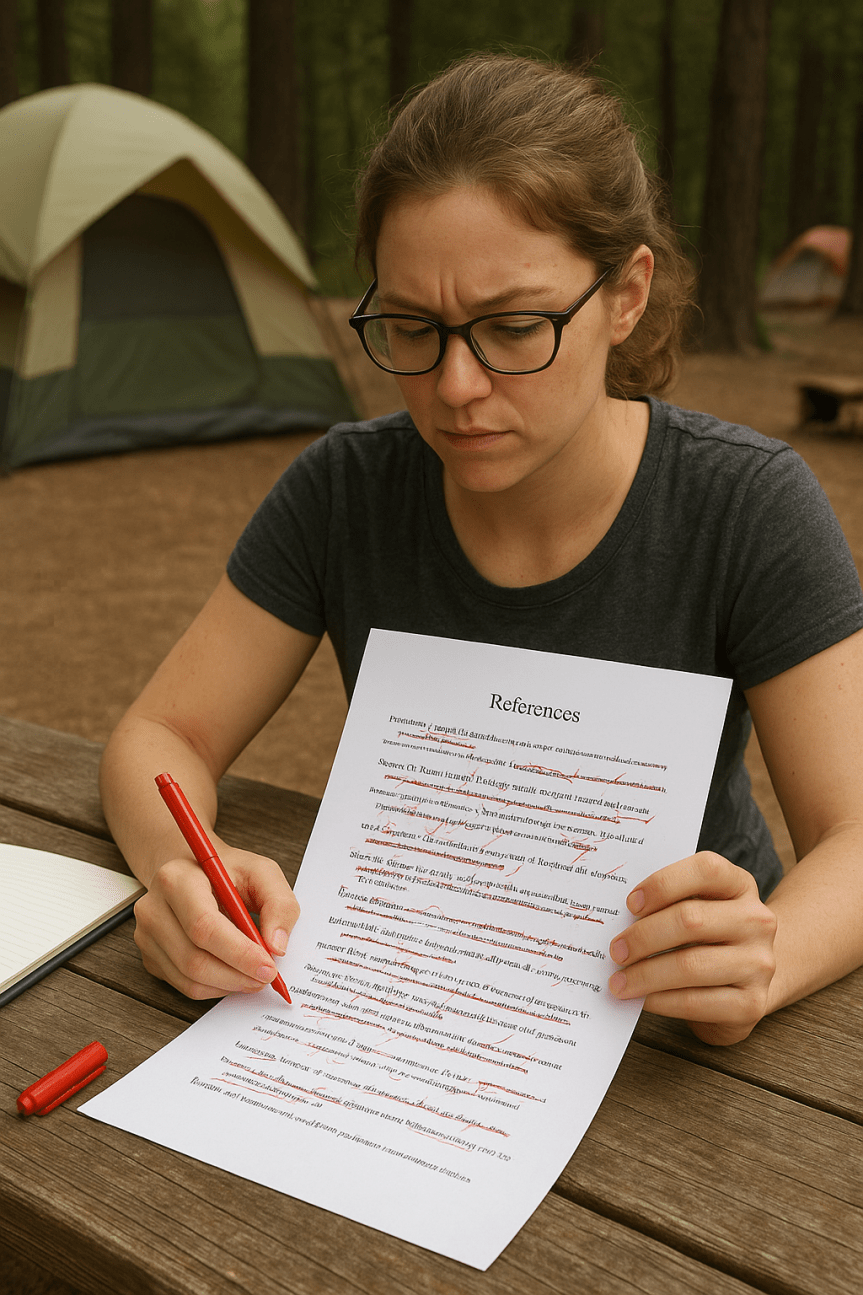
Generative AI tools like ChatGPT are impacting nursing scholarship by assisting in various tasks, but concerns about accuracy, bias, and plagiarism persist. Authors must ensure the reliability of AI-generated content and disclose its use in their work. For reference formatting, traditional management software is more reliable than AI.
When References Are Fabricated: A Quiet Warning from the Reference List

Parveen Ali emphasizes the critical importance of accurate referencing in academic work, sharing personal experiences that highlight its role in maintaining integrity. With the rise of AI tools generating fabricated references, she urges authors, editors, and educators to prioritize citation accuracy to uphold trust in academic scholarship and to prevent compromising ethical standards.
The Transformative Impact of Generative AI on Academic Writing

The rise of generative AI has transformed academic writing by providing tools for editing, translation, and document creation. While it offers significant advantages, such as increased efficiency and support for non-native English speakers, it raises ethical concerns regarding authorship, originality, and detection of misuse, necessitating careful consideration by researchers and publishers.