

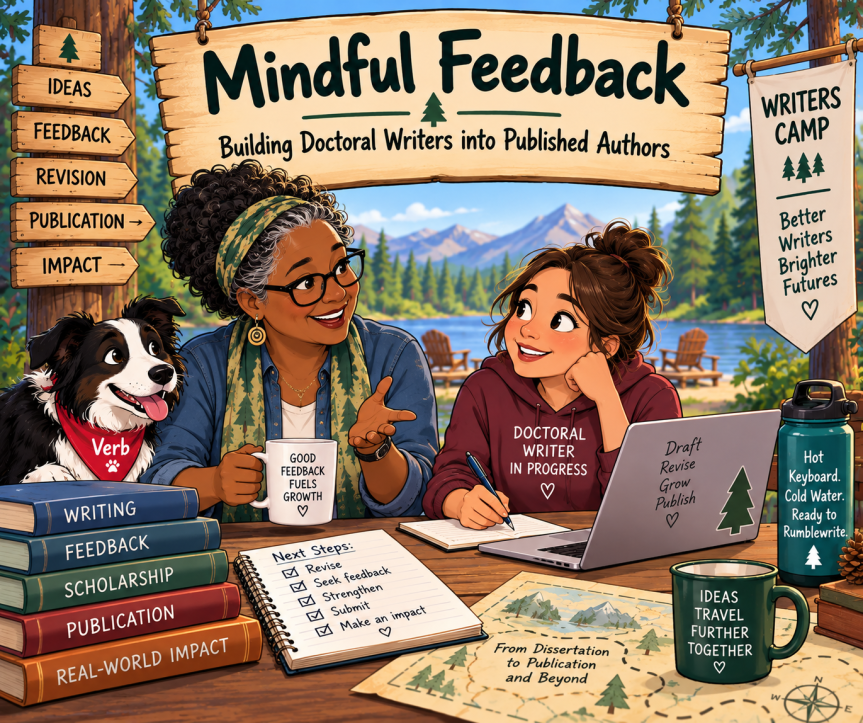
Meigan Robb emphasizes the importance of mindful feedback in the doctoral process, highlighting its role in shaping students into confident, published authors. By focusing on the writer's potential and guiding revisions without rewriting, faculty can foster motivation and self-efficacy, ultimately leading students to view feedback as a key part of their scholarly journey.
Category: Writer’s Camp Feature
Writer’s Camp Features are in-depth, mentor-style articles that explore the craft, ethics, and practice of scholarly writing. These pieces go beyond quick tips to offer thoughtful guidance, practical strategies, and deeper reflections that help authors grow in confidence and skill. Each feature is written with Writer’s Camp’s signature clarity, warmth, and encouragement—supporting writers at every stage of their scholarly journey.
Confessions of a Novice Nurse Writer: Six Submission Mistakes
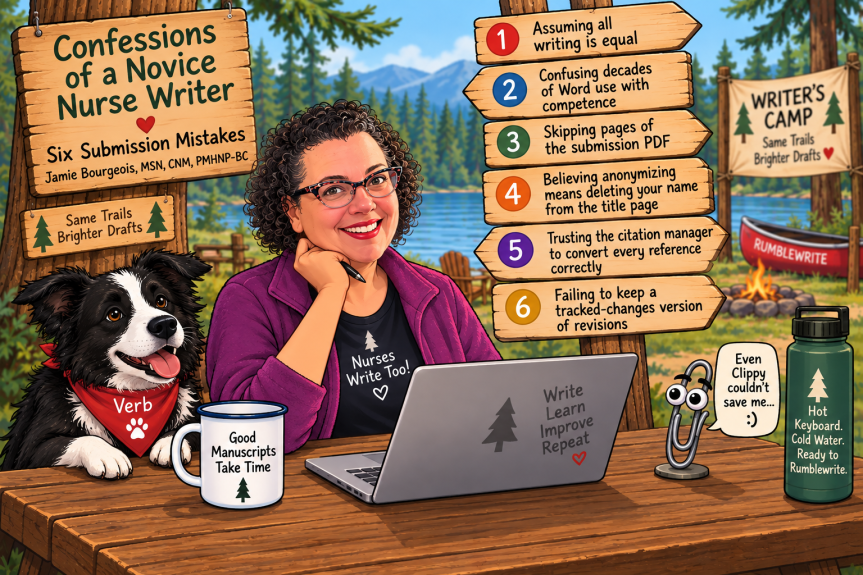
Jamie Bourgeois outlines key lessons from her experiences in scholarly writing, emphasizing the need to understand different writing styles, master Microsoft Word, and proofread submissions carefully. She discusses common pitfalls like ignoring journal guidelines, failing to keep track of edits, and improper citation management, stressing the importance of attention to detail.
Trail Stop 14: Not Every Reviewer Has to Review Everything
This article by Leslie H. Nicoll emphasizes that an excellent peer reviewer doesn't need to evaluate every aspect of a manuscript. As nursing science has evolved, specialization has made it unrealistic for one reviewer to fully assess all dimensions. Reviewers should focus on their areas of expertise and communicate their limitations to editors, contributing valuable insights rather than feeling pressure to cover all bases.
Peer Review Week Starts Tomorrow!
Pull up a camp chair—Peer Review Week starts tomorrow! From September 14–18, 2026, we’re celebrating the people, care, and thoughtful judgment that help scholarly work become stronger. There are many activities happening during the week, with opportunities to learn, listen, and join the conversation. Explore the official Peer Review Week events and activities page for … Continue reading Peer Review Week Starts Tomorrow!
Trail Stop 13: Reviewing as a Lifelong Habit

Sarah A. Martin article emphasizes the importance of becoming a peer reviewer in nursing. She outlines essential elements, such as cues for engagement, establishing a reviewing routine, and recognizing the rewards. By developing peer review habits, nurses can enhance their writing and critical thinking skills, contribute to their field, and support scholarly communication effectively.
Trail Stop 12: Writing the Recommendation

At the end of a review, reviewers are typically asked to make a recommendation: accept, revise, or reject. This step can feel daunting, especially for newer reviewers. It is important to remember that your recommendation is advisory—editors make the final decision. This Trail Stop focuses on making thoughtful recommendations, aligning comments with recommendations, and avoiding mixed messages.
Trail Pack: Publication Is Not the Finish Line

Judy E. Davidson traces the winding path from an unanswered question to scholarly publication—and then beyond it. Using a Nursing Outlook commentary and a companion MedPage Today editorial, she shows why publication is not the finish line and offers practical strategies for extending the reach of new knowledge.
Self-edit Your Way to Publication Success

Cynthia Saver emphasizes the importance of self-editing in manuscript preparation to enhance its quality before submission. Through a structured approach involving broad assessments and detailed checks, authors can identify gaps and errors, ensuring their work communicates effectively and is free of common pitfalls. Engaging peers for feedback is also recommended.
Trail Stop 11: Disagreement Among Reviewers

The article discusses the dynamics of peer review, emphasizing that disagreements among reviewers, or non-convergent reviews, are common and can enhance scholarly dialogue. It highlights the editor's role in synthesizing feedback, encouraging humility among reviewers, and providing guidance to authors in addressing conflicting comments, ultimately supporting quality manuscript development.
Trail Stop 10: Ethical Responsibilities of Reviewers
Trust is essential in peer reviewing, requiring confidentiality, unbiased assessments, and professional conduct. Reviewers must navigate potential conflicts of interest, maintain respectful communication, and handle new AI technologies carefully. Upholding these ethical responsibilities enhances the credibility of scholarly publishing and fosters trust among authors, editors, and the academic community.
Trail Stop 9: Fit the Review to the Manuscript
Effective peer review requires matching review criteria to the purpose of the manuscript. This article provides practical guidance for reviewing clinical, educational, leadership, evidence-based practice, quality improvement, and policy manuscripts. By emphasizing manuscript-specific evaluation, reviewers can provide more constructive feedback, support editorial decisions, and strengthen nursing scholarship.
Trail Stop 8: Reviewing Conceptual and Theoretical Papers

This article guides aspiring reviewers in "Becoming an Excellent Peer Reviewer" at Writer's Camp. This learning experience focuses on enhancing skills vital for effective peer reviewing, fostering growth in writing and critical analysis, and ultimately contributing to the development of quality scholarly work.