

Karen J. Foli, PhD, RN, ANEF, FAAN
Writer’s Camp Guest Counselor
Abstract
Karen J. Foli discusses her experience publishing with The Conversation, a nonprofit news organization that collaborates with experts to present accessible content. She highlights the distinctive features of this model compared to traditional scholarly publishing, particularly during the COVID-19 pandemic, emphasizing the broad readership and opportunities that followed her article on nurses’ psychological trauma.
Collaborating with journalists presents opportunities for scholars.
There is a unique dissemination model that can be formed through partnerships between journalists and content experts. It can be explained through my own experience with The Conversation. In late 2019, my coauthored book, The Influence of Psychological Trauma in Nursing, was published.1 The book was prophetic to what was about to happen to nurses working during the COVID-19 pandemic. Despite the intensity and severity of nurse traumas from 2020 through 2023, I believe that nurses’ psychological trauma existed long before the added trauma the pandemic brought to the world of nursing.
I worked at a university that subscribed to The Conversation, and several faculty members had written pieces for this outlet with broad dissemination and international consumption. I was amazed by the reach and uptake and decided to pursue publication myself, hopeful that I would have a similar positive experience. Let me share with you what happened.
What is The Conversation?
The Conversation is “a non-profit, independent news organization dedicated to unlocking the knowledge of experts for the public good.”2 The news stories are a marriage between academic experts and refining the piece to a journalistic style by The Conversation’s inhouse staff. Academic professors from around the world are the content expert as The Conversation is international in scope. The publication has a broad library of newsletters, each with different foci, such as arts and culture; education, economy, environment and energy; and politics and society. In addition, there are newsletters tailored to specific countries as well. One of their more recent offerings, launched in 2025, is the weekly The Conversation-AI, which offers current information about artificial intelligence and its influence on our world. Signing up to receive any of these newsletters is free, and you can select those areas that are of most interest to you.
Distribution of content is through a Creative Commons license and allows other sites and news organizations to use the articles from The Conversation at no charge. Launched in 2014, funding for The Conversation is derived from various sources, from donations to “subscriptions” from universities. In its first decade of existence, The Conversation published over 21,000 articles, authored by scholars from over 1,200 colleges and universities. Its 2025 Impact Report offers a summary of metrics that are even more impressive, including engaging with 16,000 researchers who have written an article for The Conversation and 119 million readers.3 There is a link on The Conversation’s webpage called “Become an Author,” with guidance on how to pitch an idea. They stipulate that content experts need to be employed as a researcher or academic with a PhD; however, PhD candidates may also be considered.
A Distinct Approach that Differs from the Traditional Publishing Model
The traditional model of disseminating scholarship is often linked with peer reviewed publications and content vetted by editors and scholarly peers with expertise in the subject area. The process can take months, even years to see this information published, and journal space is often at a premium. Open access journals have become widely available with quicker turnaround times, but often come with costs associated with publication. Limited—some would argue, privileged—readership and access to journal content can be barriers to having papers be read. Academic jargon can also impede broad uptake of novel and significant information. Publishing with The Conversation is designed to bypass some of these issues with their model of disseminating critical information.
Knowing this background, I approached the editor over health topics and pitched a story of nurses’ trauma. This led to a virtual meeting with discussion of how the process worked. After submitting the paper, a writer with journalism experience was assigned to edit my piece. There were several rounds of editing, including fact-checking sources and making sure references were cited following Associated Press guidelines. An important note is that the journalist did not receive authorship credit. The edits were rigorous and comparable to a peer review, in my opinion. I always felt that I was the author and made the final decisions on content. Finally, the article was posted about 3 months into the COVID-19 pandemic and was titled: “The Psychological Trauma of Nurses Started Long Before the Coronavirus.”4
Publishing in The Conversation: What Happens Next
Upon publication, I was not sure what to expect, but I knew nurses were existing in a dark time, and psychological trauma was ubiquitous to their emotional labor. I believed the article was timely and relevant.
When the paper was posted to The Conversation, I received access to a “Dashboard” that tracked the number of people who read the article, comments received, and comments made. If your university subscribes to The Conversation, it will also receive updates in the form of “Institutional Analytics,” which lists articles authored by the university faculty and staff and the analytics associated with their papers.
Figure 1. Global Readership of the Article
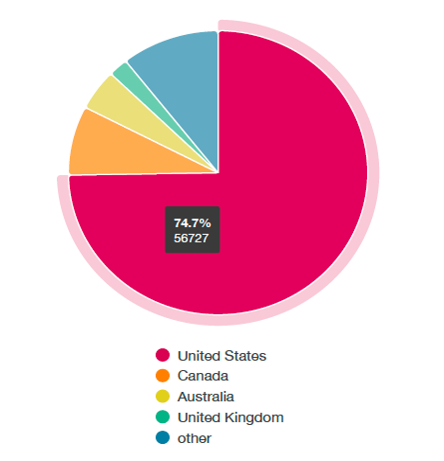
Soon, comments started to pop up and they validated the message the paper presented. Comments came from a variety of sources: deans, practicing nurses, and an ethics think tank. To date, 6 years later, this article has been read by 78,220 individuals with 33,097 readers accessing the article on CNN. While I do not have a barometer of whether this is a high or low number when compared across the board I believe this is a respectable number of reads. The other aspect to emphasize is that the readers were international, a readership I could only dream of through traditional peer reviewed papers (see Figure 1).
After my article was published in The Conversation, I was contacted by media to follow up on the topic of nurse-specific traumas. With this number of readers and the opportunities that followed, the citation became a proud piece to list on my CV. A few years later, in January 2026, I received an email from the editor who I had worked with and was notified that a digital object identifier (DOI) had been assigned to my article. In fact, The Conversation had started to assigned DOIs to past and current articles that were published for easier identification in the scholarly literature. This recognition means my article is preserved and accessible now and in the future.
Conclusion
Today, I subscribe to many of The Conversation’s newsletters, including my daily feeds of The Conversation-Global and The Conversation-US. In my estimation, the news I consume via this organization is balanced and informed. For example, there was a recent article on resilience, which I found to be helpful to my work that surrounds nurses’ trauma. Sometimes, I even recognize the scholars who have been cited as experts. Naming these experts is a subtext to their content in the articles: it makes us realize the value and presence of science in our world and humanizes the scientific voice by placing them in real settings and by expertise. Based on my experience as a published author and a consumer, I would recommend The Conversation as an outlet that expresses what is happening in our world today, often with a historical context, and through a venue that offers it freely and to all.
References
1. Foli KJ, Thompson JR. The Influence of Psychological Trauma in Nursing. Sigma; 2019.
2. The Conversation. Who we are. Published 2026. Accessed May 8, 2026. https://theconversation.com/us/who-we-are
3. The Conversation. Impact 2025: Year in review. Published 2025. Accessed May 8, 2026. https://cdn.theconversation.com/s2tatic_files/files/3984/The_Conversation_US_2025_Impact_Report.pdf
4. Foli KJ. The psychological trauma of nurses started long before the coronavirus. The Conversation. 2020, June 23. https://theconversation.com/the-psychological-trauma-of-nurses-started-long-before-coronavirus-140131
Author: Karen J. Foli
Reviewed and Edited by: Leslie H. Nicoll and Anjie Raber
Copyright © 2026 Writer’s Camp and Karen J. Foli
Citation: Foli KJ. A conversation about The Conversation. The Writer’s Camp Journal, 2026; 2(2), 13. doi.org/10.5281/zenodo.20577111
About the Author: Karen J. Foli is a Tenured Professor and the inaugural Louise Herrington School of Nursing Endowed Chair for Mental Health Nursing at Baylor University. Her work concerns the theoretical and empirical orientations surrounding the mental health of adoptive, kindship, and foster parents, as well as nurses and the specific traumas they experience. She is an award-winning author, mentor, teacher, and nurse scientist, who has received over $2 million in funding as a principal investigator/project director. Dr. Foli is among the Top 2% Most Cited Researchers in the World – 2024 (Elsevier Data Repository) and is one of the 2026 Sigma International Nurse Researcher Hall of Fame Inductees.