

By Leslie H. Nicoll, PhD, MBA, RN, FAAN
Writer’s Camp Director
Abstract
The process of Journal Due Diligence (JDD) is essential for selecting the best journal for manuscript submission. Authors should carefully evaluate journals based on fit, audience, and previous publications. By creating a shortlist of three journals and thoroughly researching them, authors can increase their chances of acceptance and streamline the submission process.
You need to be strategic and careful in your journal selection.
Your topic has been selected, identified, and clarified. The next step in the Manuscript Success process is Journal Due Diligence (JDD). You need to think strategically about where you will submit your paper and the way to do this is through JDD. It is a method to survey and become familiar with a number of journals and ultimately select the best fit journal for your manuscript.
The number one reason that editors reject manuscripts is because they are not a good fit for their journal. This sounds obvious, but far too often, authors choose a journal almost as an afterthought: “My article is about nursing students, so I’ll send it to an education journal.” Even if an education journal is the right choice, which one? There are several that are published in nursing and even more outside our discipline—how do you narrow your selection?
Keep in mind that you can only submit to one journal at a time. You can write multiple query letters—although if you have done your JDD properly you won’t need to write any query letters—but your manuscript should only be under consideration at one journal at a time. If it is rejected, you can revise and submit somewhere else, but the accepted standard is one journal for publication consideration during the submission process.
The term “due diligence” comes from banking and business industries. It is the process of thoroughly vetting an entity before investment or purchase. With journals, it means that you will endeavor to learn as much as you can to determine that it is the best place for you to send your manuscript. You want to avoid having an editor reject your manuscript because it is a poor fit. Perhaps your manuscript will not be accepted for other reasons, but we’ll address that in a later article.
Macro Level Journal Considerations
Back in the old days, JDD would require a trip to the library. Now, it can be done anywhere with a computer. Every journal has an online presence, so it is easy to do your journal research. There is no excuse not to do JDD every time you write a manuscript. And to be honest, it’s fun! The world of journals is amazing and finding publications you never knew existed can be eye opening. The graphs in Figure 1 are sort of tongue-in-cheek, but they illustrate the point I am making.
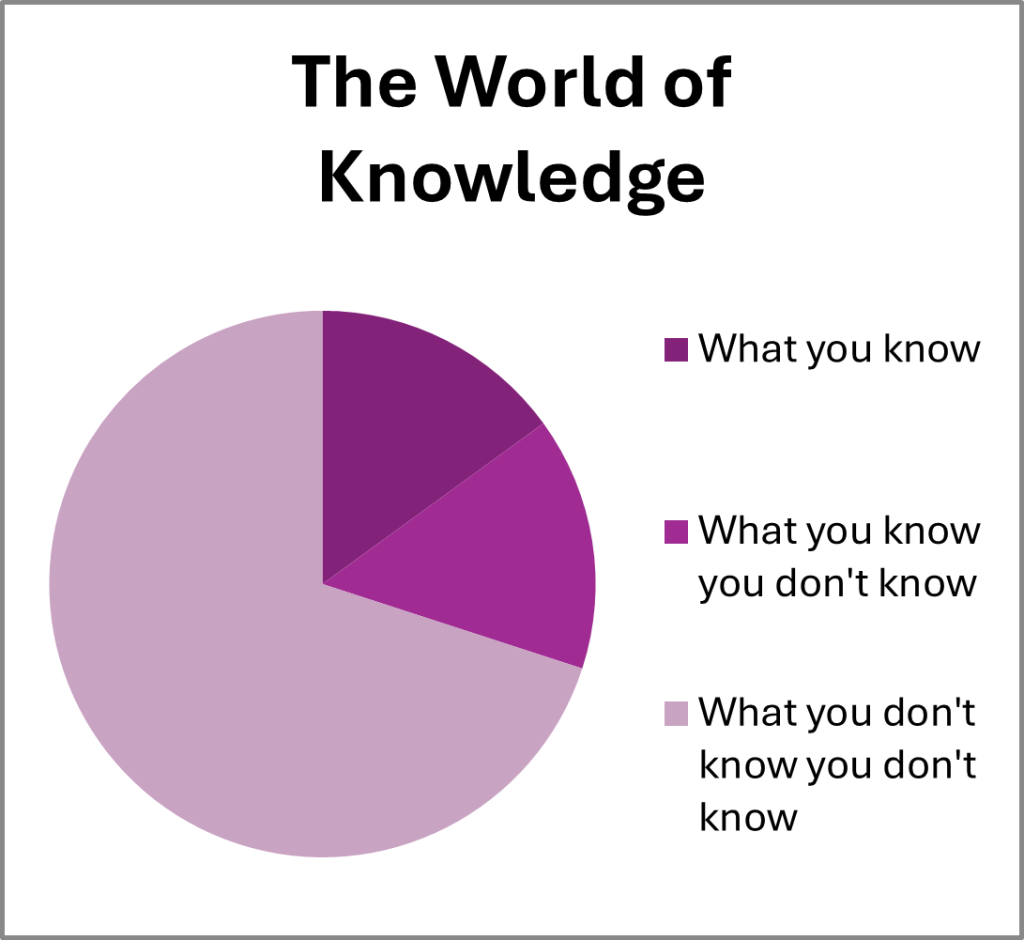

Figure 1. What We Know and Don’t Know About Knowledge and Journals
I generally suggest having 3 journals on your short list of potential publication outlets: 1) Great fit, first choice; 2) Good second; 3) Distant third. Having a vetted list of journals means that if things don’t work out quite as you expected with #1, you are ready to move quickly to #2 with a revision and submission. Once you begin your submission process, you don’t want to waste time, and having a go-to list makes this easier.
Some people take a “college admissions” approach to their list of 3 journals: 1) Good fit but a stretch; 2) Comfortable second; 3) Distant third. This works and if you get an acceptance from your “stretch” (first choice) journal you will be thrilled. But this approach is riskier, so prepare yourself for disappointment and be ready to go quickly with your second journal in the next round if necessary.
Now that you know what you want to accomplish—a list of 3 journals—consider your topic. From a macro level perspective, what are the key terms that describe it? The following questions might help spark your thinking:
- Is it a research report, and if yes, what was the method?
- If it is not a research report, what is it? For example, concept analysis, case study, review (literature, systematic, integrative, umbrella, etc.), explication of a theory, evidence-based quality improvement initiative (EBPQI), or something else.
- Article with a focus on a particular disease or illness?
- Article with a focus on a specific population or group of people?
- Article on a non-clinical aspect of nursing, such as management or leadership?
The answer to each of these questions might point you in a different direction in terms of a journal. The second bullet point, in particular, needs careful consideration. If a journal has never published a concept analysis and that’s what you have written, then you should cross that journal off your list. You are probably not at the stage in your career to be trying to break new ground with an editor. Some topics are quite specialized and if that applies to you, then you need to find the niche journal editor who will appreciate what you have written.
Creating Your Starting List of Journals
Now you are ready to get to work. At this point, it is appropriate to stay at the macro level and match the key concepts you have identified to the journals you are investigating. As you think about journals, here are some tips to get going.
- Begin with your colleagues. A 5 minute conversation with a colleague might generate 5 journal ideas and save you 5 hours of searching. I call this the “5-5-5 bonus.” Likewise, if you have colleagues who serve as manuscript reviewers for a journal or are members of the editorial advisory board, ask them about the journal—they may have “insider” information to tell you if their journal would be appropriate for your topic.
- You have read related literature on your topic so look at those articles and where they have been published. Another short list can be created from this assessment.
- Look at the reference lists of the articles in the above bullet. This is a good way to dig a little deeper and find journals that may be a good fit but are not immediately obvious to you.
- Use the Directory of Nursing Journals posted here at Writer’s Camp. This resource provides a comprehensive listing of vetted journals in the professional nursing literature and likely includes many that will be new to you but may be excellent choices for your JDD.
From this, come up with a rough list of journals. You should have at least 3, but more is fine. The next step is to begin to drill down and learn more about each of the journals you have identified. Take each journal individually and go through the following steps.
- Find its home page on the Internet. The journal home page will give you more than enough information to begin your JDD. There will likely be a menu or section specifically for authors. This is what you want to investigate.
- Look at the masthead. Who is the Editor? Is there an Editorial Board listed? You may need to click on a different menu to find this—it is often included in information about the journal. From the Editorial Board, do you see any familiar names? If so, make a note of this. You may want to contact this person(s) later to gather more information about the journal.
- Look at the publisher. In nursing, there is a short list (n = 6) of well-known, well-established publishers that produce 64% of the journals in the Directory of Nursing Journals. The other 36% (n = 269) are smaller companies, associations, or universities, many of which have only one publication. If a publisher name is unfamiliar to you, you may need to take a detour and do some investigating to make sure it is not a predatory or unethical publisher. More about this later!
- Next, find the mission statement or purpose of the journal. Again, consider the fit. If the purpose says, “We publish cutting-edge, empirical research,” and you are not writing a research report, this probably isn’t the right outlet for you.
- In the mission statement/purpose, see if the audience (readers) is identified. If it is a nursing journal, who is in the audience of nurses? If it is an interdisciplinary journal, are nurses part of the readership? As I said earlier, there is a time to break new ground and there is a time not to try this. In this case, the latter is appropriate.
After reviewing the purpose, if the journal still looks like a good possibility, then the next step is to become familiar with the specific types of articles that are published. If you have selected a journal that you read regularly, you may already know this. But I would hazard a guess that 80% of articles are submitted to journals that the author is not familiar with, thus you need to become an instant expert.
“Getting to Know You:” Dancing with Journals
Once you have your initial list, it is time to get “up close and personal.” Begin by scanning the table of contents for several issues of the journal—I usually suggest a year. Click on titles that interest you or are similar to your topic. Even if the journal doesn’t have full text online, they will most likely have an abstract or synopsis that you can review. Read the titles and abstracts, considering the issue of fit. Look at the credentials of the authors, particularly nurses. Try to picture your envisioned article in the pages of the journal you are reviewing.
Another suggestion, to be more comprehensive: go to PubMed at the National Library of Medicine (NLM). Do a search on a key word (MeSH heading) related to your topic and the journal title. This will bring up articles that may be relevant to your proposed topic that have been published in this particular journal. MEDLINE includes abstracts which will allow you to further determine if this journal is a good fit. Keep in mind that if your journal is not indexed in MEDLINE, this strategy won’t work. Not all nursing journals are indexed in MEDLINE. CINAHL is an alternative that you might try to use to learn about the journal, but you need to have a subscription to CINAHL through your work or school. PubMed and MEDLINE are free for everyone. (NB: PubMed is the search engine, and MEDLINE is the database. Both are at the NLM.)
As you move through this “getting to know you” process for the journals on your list, you may discover that a journal you have selected is not at all appropriate for your topic. If that happens, cross it off. You should have a long list from your macro assessment and this crossing off is part of the process. Ultimately, you want to have 3 journals on your JDD list. Although your first choice should ideally be the best fit for your article, it’s important to have some fallback choices in case things go awry in the submission and review process, as I noted earlier.
Journal Due Diligence Worksheets
I have created 2 worksheets that you can use in your JDD. The first one has columns for 3 journals and the second is for one. I suggest completing these. The process of systematically reviewing a journal and writing everything down can help points “click” in your mind. You can also save your completed worksheets and use them again for your next manuscript—you will already be a step ahead.
Conclusion
Be careful and deliberate in your journal selection process, especially at the beginning. Work from a big picture and then narrow down your choices to a list of 3. Review those journals carefully, looking at articles that have been published and the authors. You want to have an “Aha!” moment where it becomes clear to you that the journal you have chosen fits your article like a key in a lock.
Next up: Journal “selectors;” predatory publications; and association/society journals.
Author: Leslie H. Nicoll
Editor: Marilyn Oermann
© 2025 Writer’s Camp and Leslie H. Nicoll. CC-BY-ND 4.0
Citation: Nicoll LH. Manuscript Success: Journal Due Diligence. The Writer’s Camp Journal, 2025;1(1), 10. doi: 10.5281/zenodo.15570045
This is such important information, and I am so glad to see it posted on Writer’s Camp! A terrific resource! The same principles also apply for selecting a web platform for blog posts! Thank you Leslie!
Thanks, Peggy. One of the things to consider with writing for a blog is, do they welcome guest authors? Not all blogs do. I wanted to write something for a blog once (not at all nursing related, it had a focus on food and recipes) and was absolutely turned down. That’s the blog owner’s prerogative but I will note that the blog in question is not active anymore. 🙂
Thank you, Leslie. Great information here. What are your thoughts about using JANE?
https://jane.biosemantics.org/
I am going to be writing about JANE (and other journal selectors) in my article next week. Stay tuned!
This is incredibly helpful information! I have saved your JDD sheets and will be using them to decide where to send my dissertation manuscript! I am loving being a “camper” at Writer’s Camp! I’m learning so much!
Leslie,
Thank you for the wealth of information. I learn each time I log onto the Writer’s Camp website.